DFARS 252.204-7012 does not tell a contractor to buy whichever cloud product has the most government-looking logo. When an external cloud service provider will store, process, or transmit covered defense information, the clause requires security requirements equivalent to the FedRAMP Moderate baseline and also requires support for specified incident and forensic obligations.
Read the exact cloud sentence in 252.204-7012
The contractor remains responsible for deciding whether the service, contract terms, configuration, identity path, endpoints, integrations, and operating procedures together satisfy the requirement. A cloud provider can be an important part of the answer without being the entire answer.
Paragraph (b)(2)(ii)(D) addresses external cloud service providers used for covered defense information. It requires and expects the contractor to ensure that the provider meets security requirements equivalent to those established for the FedRAMP Moderate baseline. The wording is about equivalent security requirements; it is not written simply as 'must be listed in the FedRAMP Marketplace.'
That distinction does not make equivalency easy. It means the contractor needs evidence strong enough to support the equivalency claim and should understand the current Government interpretation that applies to the contract. Procurement should avoid accepting a vendor's marketing phrase as the only proof.
Equivalency evidence must be reviewable
The Department's December 2023 FedRAMP Moderate Equivalency memorandum makes the evidentiary bar much more specific than a vendor saying it is 'aligned.' For a cloud service offering that is not already FedRAMP Moderate Authorized, the memo describes equivalency as 100 percent compliance with the latest FedRAMP Moderate security-control baseline, assessed by a FedRAMP-recognized 3PAO, with a defined body of evidence made available to the contractor.
That body of evidence is part of the contractor's diligence problem. The memo identifies items such as the SSP and supporting security plans and procedures, and current CMMC FAQs point contractors back to that equivalency process. Before approval, determine which exact service boundary was assessed, what evidence you are allowed to review, and how an authorized assessor could review the material later.
Document the decision without copying restricted evidence unnecessarily. Record the service and tenant, assessment or authorization basis, evidence package reviewed, review date, reviewer, limitations, inherited responsibilities, and the trigger for re-review. A procurement note that only says 'FedRAMP equivalent per vendor' is too weak to explain the conclusion later.
Incident obligations belong in the service contract
The clause requires more than baseline controls. It points the external cloud provider to the incident-reporting, malicious-software, media-preservation, forensic-access, and damage-assessment provisions in paragraphs (c) through (g). If the provider cannot preserve relevant data, support a 72-hour investigation, or produce forensic information when needed, a control matrix alone does not solve the contractual problem.
Before signing, define notification timeframes, after-hours contacts, log and image retention, access to forensic artifacts, support for Government requests, and responsibilities when malicious software is found. The contractor's 72-hour reporting clock should not be held hostage by a provider's three-business-day support SLA.
Scope the systems around the cloud service
Even a strong cloud service sits inside a larger path. Users reach it from endpoints; administrators manage it through privileged accounts; identities may come from another provider; data may be exported to local tools; backups and logs may live elsewhere. Map those connections before declaring the cloud tenant to be the whole CUI environment.
Pay particular attention to integrations and support channels. A ticketing plug-in that copies attachments, a local sync client, a security log forwarded to another SaaS platform, or an admin's unmanaged laptop can create additional paths for CUI or security-protection data. The system diagram should show these dependencies explicitly.
Split inherited controls from contractor-managed controls
Create a responsibility matrix. For each relevant requirement, identify what the provider implements, what the contractor configures, and what remains shared. Typical contractor responsibilities include user lifecycle, MFA enrollment, role assignment, device security, data labeling, sharing settings, incident escalation, and tenant-specific retention choices.
This matrix answers questions that a generic statement that the vendor is 'CMMC compliant' cannot. CMMC status applies to an assessed contractor information system and its scope; a service provider's security posture does not automatically establish the status of your endpoints, users, configurations, or business process.
Procurement questions to ask before approval
Require plain answers to six questions: What evidence supports FedRAMP Moderate equivalency? Which service boundary does that evidence cover? How quickly will we be notified of incidents affecting our tenant? What logs and forensic artifacts can we obtain? How long are they retained? Which security responsibilities remain ours? Capture the answers in the service approval record.
Revisit the record at renewal and after material service changes. The fastest way for a compliant cloud design to become stale is to assume the provider's original posture, features, and contract terms never change. Cloud approval should be a maintained risk and compliance decision, not a one-time procurement checkbox.
For every approved external cloud service that may handle covered defense information, keep an approval packet containing the service description, tenant boundary, data types, contract owner, security owner, equivalency evidence reviewed, review date, incident-support commitments, shared-responsibility matrix, and renewal date. Link to evidence under NDA rather than copying it into an uncontrolled folder if licensing terms restrict distribution.
Add the architecture around the service: identity provider, managed endpoints, integration services, logs, backups, privileged-admin path, and allowed export methods. This prevents future staff from assuming the cloud provider's security posture covers contractor-managed systems that were never part of the provider evidence.
Record unresolved limitations openly. If a provider retains logs for less time than the contractor would prefer, or a forensic artifact requires premium support, make the dependency visible and decide whether another control or contract term is needed. A hidden limitation is more dangerous than a known one.
At renewal, do not simply approve the invoice. Re-check provider evidence, service boundaries, contract language, incident contacts, product features, and material architecture changes. Cloud services evolve quickly; a defensible approval process assumes that last year's facts may not still be true.
When comparing two providers, score evidence quality and incident cooperation separately from feature fit. A service can be technically attractive yet difficult to defend contractually if the provider will not disclose assessment material, preserve required records, or support forensic requests. Make those obligations part of selection criteria early, because they are expensive to negotiate after data has already migrated.
Treat equivalency as a due-diligence file that can survive a vendor renewal. Record the service and boundary reviewed, the evidence package and date, who evaluated it, any compensating facts or limitations, the contract language relied upon, and the next review trigger. If the cloud provider later changes architecture or replaces an assessment report, the team can see what changed instead of starting from a vague memory that 'security approved it last year.'
A short working check
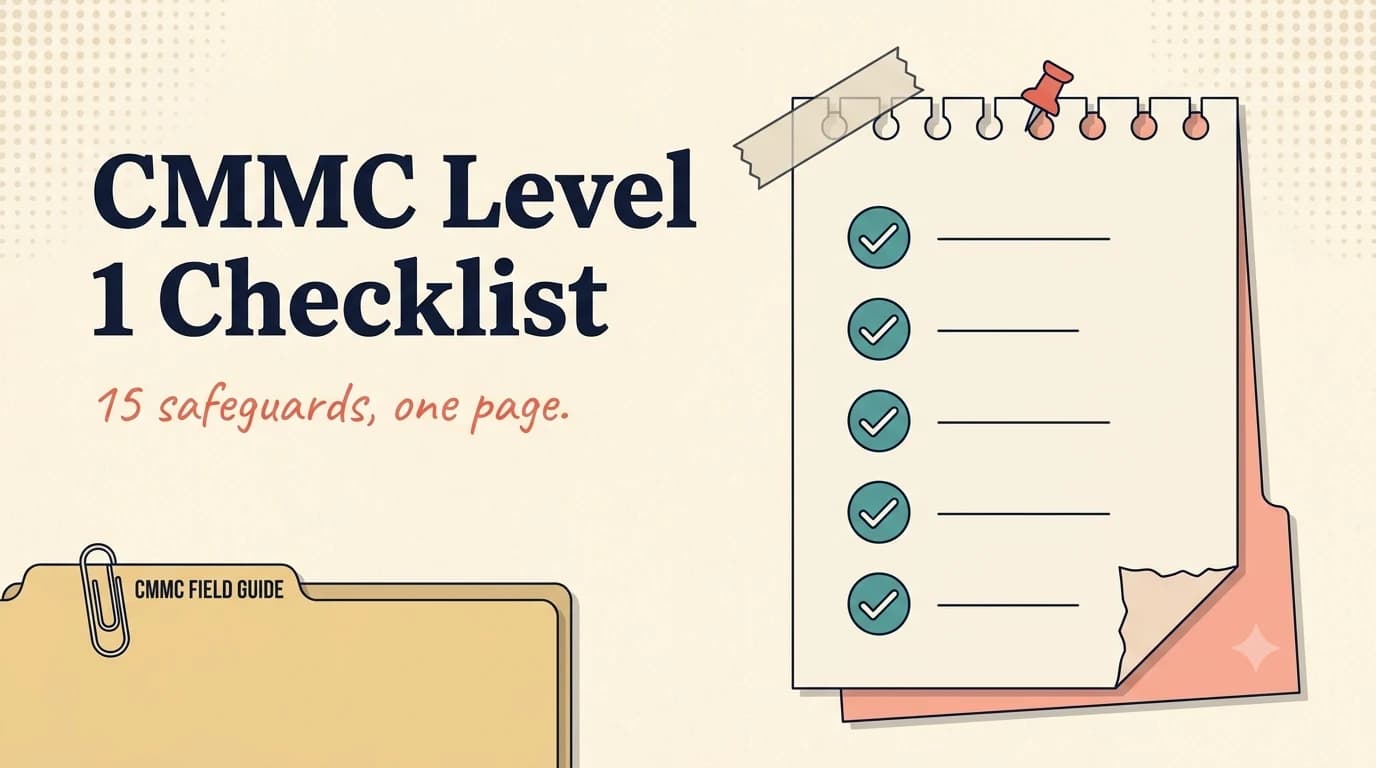
- ✓Confirm whether the service stores/processes/transmits CDI
- ✓Request evidence for Moderate-equivalent security
- ✓Review incident and forensic support terms
- ✓Map admin and integration dependencies
- ✓Document shared-responsibility ownership
Common questions
Must the cloud offering be listed as FedRAMP Moderate Authorized?
Not necessarily. DFARS 252.204-7012 requires security equivalent to the FedRAMP Moderate baseline for the described external cloud use. The Department's equivalency memo provides a separate path for non-authorized offerings, but that path has specific 3PAO-assessment and body-of-evidence requirements; a marketing claim is not enough.
Does a compliant cloud provider make the whole environment compliant?
No. Endpoints, identities, configurations, user behavior, integrations, and contractor-managed responsibilities remain part of the security picture.
Does a provider saying 'FedRAMP aligned' prove equivalency?
No. Marketing language alone does not establish that the service meets the contract's required security equivalency or that incident and evidence obligations are supported.
Official sources used for this guide
Open the primary source before making a contract-specific decision. Regulations and program implementation can change.